Repair & Recovery
Dust Front never explains its repair system, and it's one of the most common questions from new players. Vehicles don't heal on their own — you need a dedicated repair source, and the Empire have four, each with a different role. Keeping armor topped up is what lets a veteran strike group survive long enough to climb the rank ladder.
The four repair sources
| Source | Minerals | How it works |
|---|---|---|
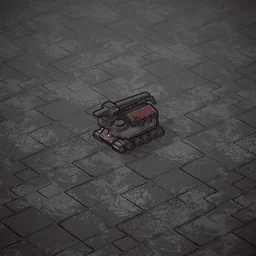 BREM BREM | 100 | The primary repair vehicle. Repairs vehicles and is the only thing that can restore a wrecked super-heavy (see below). |
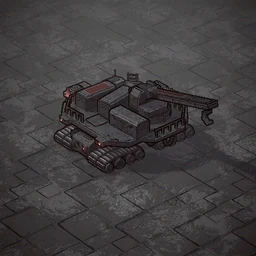 TRM "Silach" TRM "Silach" | 300 | Heavy repair vehicle. Auto-repairs vehicles in the squares around it; an upgrade adds infantry healing. Park it inside your formation. |
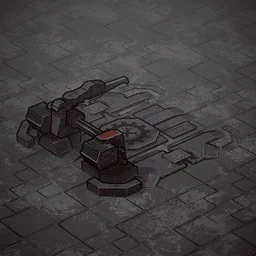 Repair site Repair site | 200 | A relocatable pad — anything that drives onto it is repaired. Good as a fixed aid station behind the line. |
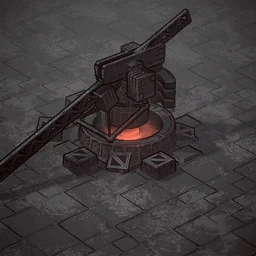 Construction crane Construction crane | 230 | Primarily a second build queue, but it also repairs equipment within a small radius of the crane — handy base-side repairs for free. |
Costs are the base mineral costs; the crane and repair site also draw energy.
Recovering wrecked super-heavies
When a super-heavy like the 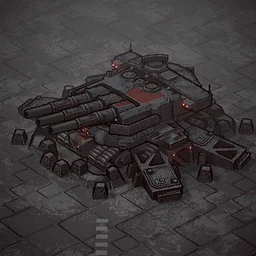 Dreadnought or
 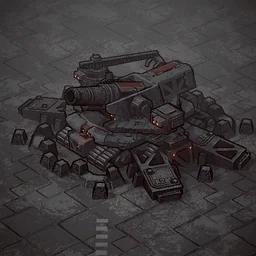 Dreadnought "Howitzer" is destroyed it leaves a wreck rather than vanishing. The BREM is the only unit that can restore that wreck back into a working vehicle — a far cheaper play than rebuilding a 700-mineral artillery piece from scratch. This is exactly what BREM is for; ordinary repair sources only patch up vehicles that are still alive.
Issuing & queuing repairs
Select a repair vehicle and order it onto a damaged ally (the same way you'd issue an attack). The heavy repairers — the TRM "Silach" and Construction crane — repair automatically within their radius, so the most reliable setup is simply to keep one near your front line and let it work. Players also report that repair orders can be shift-queued like any other command, so a single BREM can be told to patch up several vehicles in sequence. Auto-repair radius behaviour is from the units' own descriptions; the exact key-queue binding is community-reported (the game ships no manual), so confirm it against your keybinds — see the controls reference.
Practical setup
The turtle-and-artillery playstyle the community favours leans hard on repairs: park a TRM "Silach" (or a Repair site) just behind your Dreadnoughts so their armor is topped up between volleys, and keep a BREM in reserve to recover anything that does go down. Repairing is almost always cheaper than replacing.